
In early September, Anthropic opened the playbook on Claude Commerce Agents. The setup is clear. On one side is the buyer's agent. It searches catalogs, compares specs, fills the shopping cart, and hands the final checkout back to the store. On the other side is the merchant's agent. It acts like a digital clerk. It checks sales, monitors stock, and drafts promotions. It holds these drafts until a human approves them. Big names like Shopify, Visa, Mastercard, and Accenture quickly backed the move. Shopify even dropped a guide showing how to hook this agent up to a store's catalog and the Universal Commerce Protocol (UCP).
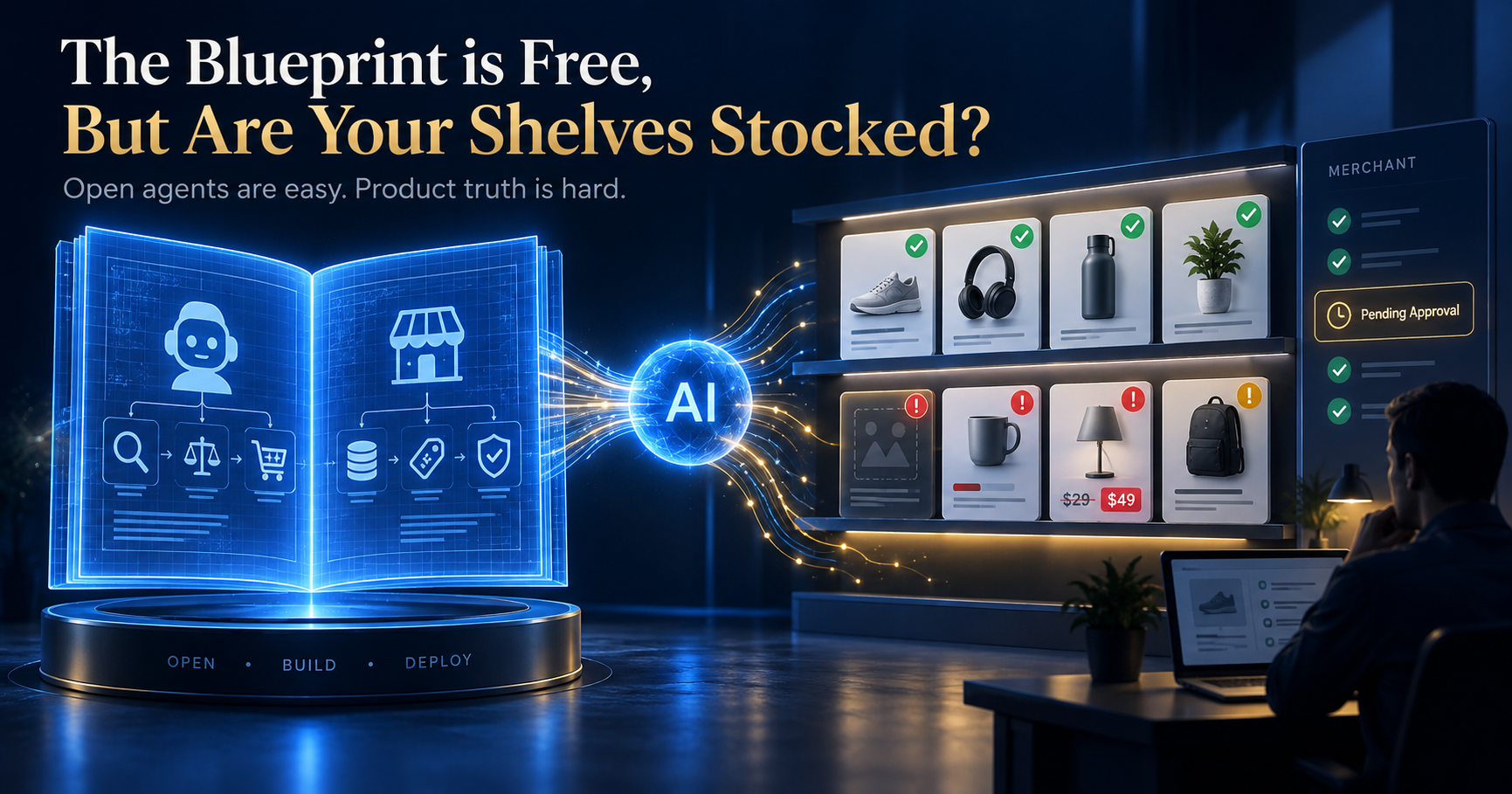
It sounds like a massive tech party. But when the confetti clears, a very plain question remains. The digital shell is cheap now, but what about the actual goods?
Leonardo da Vinci believed that to truly master his art, he first had to understand the anatomy beneath the skin. Today’s AI agent blueprints are like a perfectly forged, razor-sharp scalpel. They come with a manual and all the right attachments. A tech team can supposedly get a commerce agent running in days. But a sharp blade is useless if your map of the anatomy is wrong. If your product traits are missing, if prices and inventory clash, if your return policy reads like vague poetry—that sharp scalpel will just slip into the wrong gaps.
Industry experts keep pointing this out. The protocols handle the handshake. The open-source blueprints handle how the agent runs. But neither tells you why the AI should trust your product enough to recommend it. The hard part is no longer building the bot. The hard part is your product data. Once seen as basic housekeeping, this data is now your binding contract with the machine. If it is clear, the machine trusts it. If it is messy, the machine skips you. Worse, it compares you to a rival and leaves you in the dust.
Think of it as two doors. The outward door faces the buyer. They ask, “Will this work in high humidity?” or “Can I return this in 30 days?” The inward door faces your team. They ask, “Which item’s price just spiked?” or “Will this sale kill our margins?” The blueprint gives us beautiful handles for both doors. But if there is no hard, readable, and verified truth behind those doors, the handles just turn in empty air. Anthropic is upfront about this. Their merchant agent only drafts ideas; humans must approve. Their buyer agent cannot invent prices. This is a safety rail, but also a polite truth. The AI can suggest, but the merchant must own the facts.
So, the dream of “getting picked by AI” comes crashing back down to the reality of your shelves. Shopify notes that AI chat traffic is booming. But the focus remains on structured data, real-time updates, and consistent facts. The protocols are just your ticket in. The real game starts once you are inside. Can your specs be compared fairly? Does your evidence hold up? If you lose a sale, can the system tell you why? A visibility score is like a thermometer. It tells you that you have a fever, but not what caused it. The disease hides in the gaps of your catalog. Maybe you forgot a key spec. Maybe you listed an old sale price. Fixing a web page so it looks “AI-friendly” is entirely different from fixing the reason you weren’t chosen.
The holiday rush adds pressure. Everyone is rushing to launch before the code freeze. It makes sense. Buyers now ask the AI first before visiting a store. But launching a shiny AI shell without checking your actual data is dangerous. You are driving holiday traffic to an outdated catalog. More chats just mean faster, bigger mistakes. When that happens, the buyer loses trust in the AI, and they lose trust in your brand.
The Roman philosopher Seneca once observed that no wind is favorable to a sailor who does not know his port. Open-source blueprints, connection protocols, and payment networks are the strong winds the industry has given us. But the merchant still needs a reliable map. You must ensure every point on that map is true. Who stated a product spec, and when? Where is the proof? If you change a detail, did all channels get the memo, or are some still telling the old story? If your map is wrong, a faster ship just wrecks you on the wrong shore.
This is where a true “Hasmord Merchant OS” steps in. Its goal is to make sure every item is ready for an AI assistant. It doesn’t fight Anthropic over the agent’s shell. It doesn’t fight the protocols over the checkout process. It sits above them. It answers the hard questions. Why did we win this time? Why did we lose? Were we invisible, or were we seen but simply outmatched? Intelligence, control, observation—these are big words. In daily life, they mean three simple things. Do the facts match? Can we stop a bad suggestion? Can we look back and see what happened?
Open-sourcing these blueprints is great. Building an agent is no longer a moat; it is just the price of admission. The quiet, smart players will now step back and count their stock. They will check what the machine can read, what facts hold up, and what changes need a human eye. The loud players will keep fighting over who downloads the code first. Code gets outdated. What people remember is whether, when the scalpel makes its cut, the bone is exactly where it is supposed to be.