
Buyers used to type a few scattered keywords into a search bar. Now, they talk to digital assistants like they are chatting with a friend. They ask for shoes suitable for a weekend five-kilometer run, narrow feet, and mixed terrain. The questions are longer. They are conversational. For a machine to answer these smoothly, it cannot rely on catchy marketing slogans. It needs clean, highly specific facts pulled straight from your public product data.
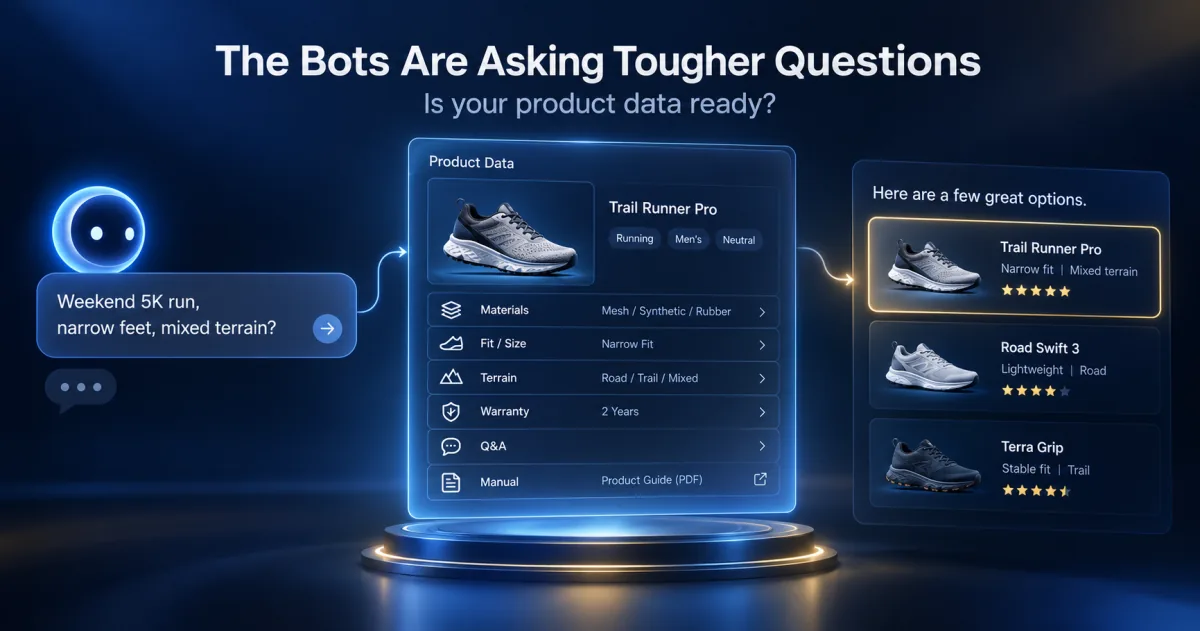
Earlier this year, Google quietly added a batch of "conversational attributes" to its Merchant Center. The official explanation is refreshingly straightforward. These optional fields help digital systems understand the finer details of a product, which also improves traditional search. Industry forums frequently discuss these new additions. They cover product highlights, specific details, style variants, related items, question-and-answer sections, and document links. This is not some secret algorithm hack. It is simply a way to hardcode the questions humans naturally ask directly into your data feed.
This shift matters far more than just having a few extra boxes to fill. Conversational search does not hand you a page of ten blue links and tell you to figure it out yourself. It spits out a short paragraph and a tiny, curated list. In that brief response, a machine will only mention your specs or compare your product if it can actually read your data structure. Google's own guidelines carry a strict warning for these attributes. You can list technical specs. But do not stuff the fields with promotional pricing, company names, or old-school SEO keywords. The fields are just containers. The content must remain cold, hard facts.
Ernest Hemingway famously believed that good writing should strip away the decorative fat and deliver the raw truth. Product feeds operate on the exact same principle. The goal is not to be flashy. The goal is to be ready when a specific question drops. If a buyer asks about materials, did you clearly define them? If they ask about sizing, are the different variants separated properly? If they ask for an installation manual, does the document link actually work? These details seem minor, but they are the exact components digital assistants inspect first.
People in the industry love throwing around buzzwords like AEO and GEO to describe this trend. It sounds incredibly futuristic. Yet, Google Search Central takes a very grounded stance on generative search. To them, most of the so-called dark magic is useless. Creating hidden files for bots, chopping up articles, or faking mention counts will not help you. The fundamental rules remain unchanged. You still need reliable content, a site structure that is easy to crawl, and crystal-clear information. The new attributes in Merchant Center simply translate this old wisdom into specific data fields. You just have to fill them with verifiable facts.
Of course, filling in every box does not guarantee a sudden spike in sales. Different tools read data in different ways. The tech protocols are still evolving. The industry is currently experimenting with standards like the Universal Commerce Protocol to help bots and merchant servers shake hands. But a handshake only establishes a connection. What happens next depends entirely on your data. Think of a protocol as a translation earpiece in a boardroom. Everyone finally understands words like "catalog" and "details." But the earpiece does not guarantee the manual sitting on the table is accurate, updated, or matches your main website.
For retailers, the most practical test is a simple exercise. If a stranger only had access to your public product feed, could they accurately answer a buyer's follow-up question? Are your specs written as comparable facts, or are they just a pile of adjectives? Can a machine clearly tell the difference between your product variants? Are your instruction manuals and FAQ sections filled with real content, or are they just empty digital shells? These questions do not rely on complex tech jargon. They highlight a basic reality. When product discovery happens inside a chat window, your product manual stops being a piece of marketing copy. It becomes a shared source of truth for both humans and machines.
Occasionally, some merchants rush to cram data into every new field. The urgency makes sense. The holiday season is approaching, and new search platforms are gaining traction. But rushing to fill the blanks without checking the facts is dangerous. You are simply funneling holiday shoppers toward an outdated instruction manual. More conversations will just amplify your mistakes. Recommending the wrong thing hurts a brand far more than simply being absent from the conversation.
The physicist Richard Feynman once noted that knowing the name of a bird in every language tells you absolutely nothing about the actual bird. The label is just a name. The reality of the object is what matters. Fields like product details, Q&A, and document links are just labels. The sole tread, the terrain suitability, and the warranty coverage are the reality. When the labels match the reality, the machine gives a solid answer. When they do not, all these shiny new data fields just help the bot tell the wrong story faster.
At Hasmord, we keep our public message very simple. We are a Merchant OS designed for the new era of product discovery. We help retailers ensure their products are correctly understood, credibly compared, and given a measurable chance to be recommended. But the core lesson today boils down to one plain truth. The machines are asking tougher, more detailed questions. It is time for your product manuals to stop trying to look impressive, and start giving clear answers.