
Hasmord Blog
How answer engines and AI agents decide what to recommend, and how companies build the trust and evidence that earn the recommendation.

Salesforce put an AI sales agent on its own site to answer late-night buyer questions. Owning the conversation is the easy part; the answer still has to be right.
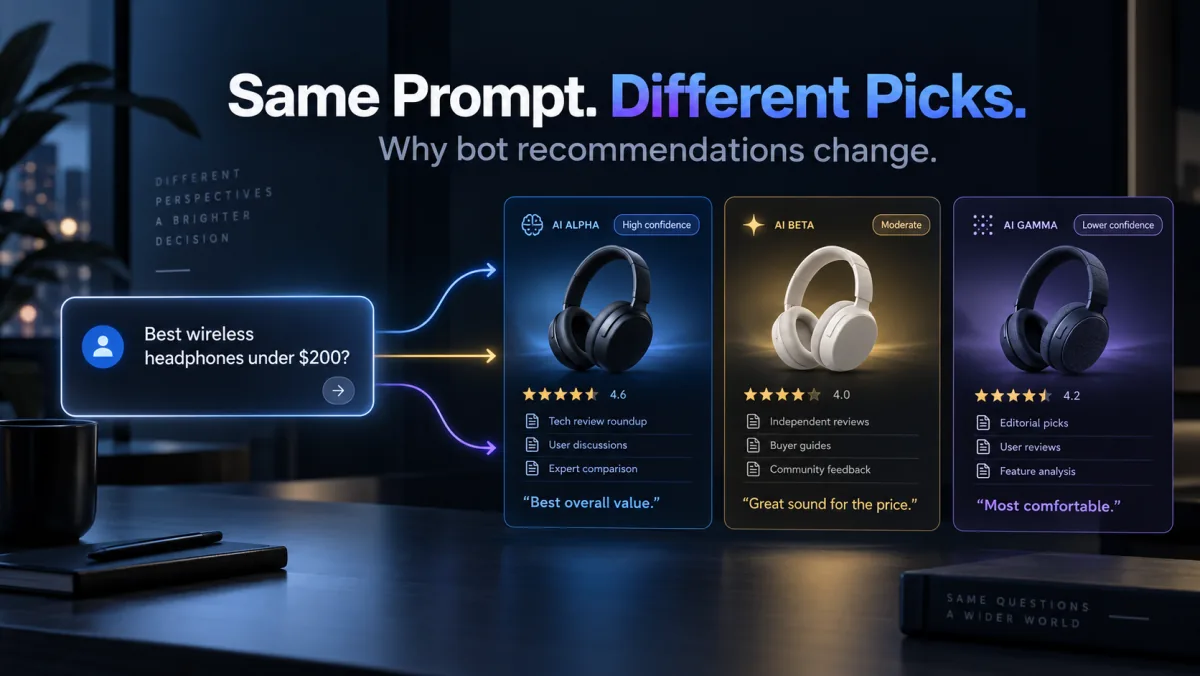
Researchers asked ChatGPT, Gemini and Google’s AI Overviews the same buying questions three times. The picks changed and the cited sources barely overlapped. A screenshot proves one answer, once.
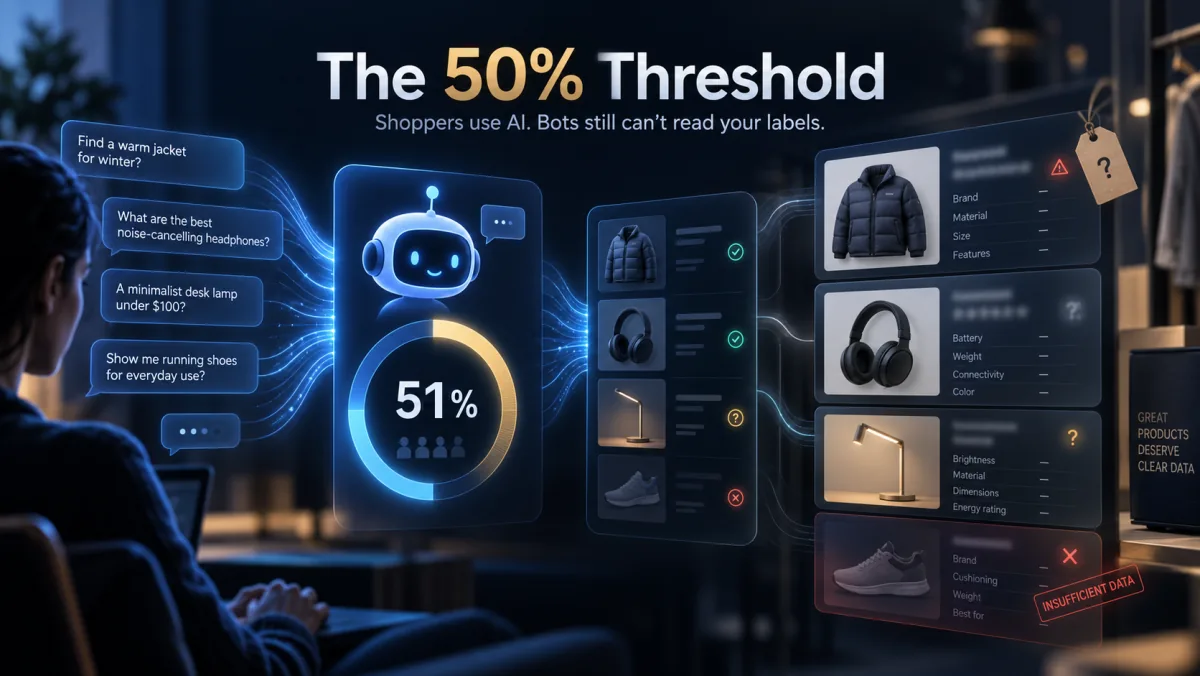
NielsenIQ says 51% of U.S. consumers used an AI tool to shop last month. The tools went mainstream; the product facts they read did not. Three questions to ask every week.
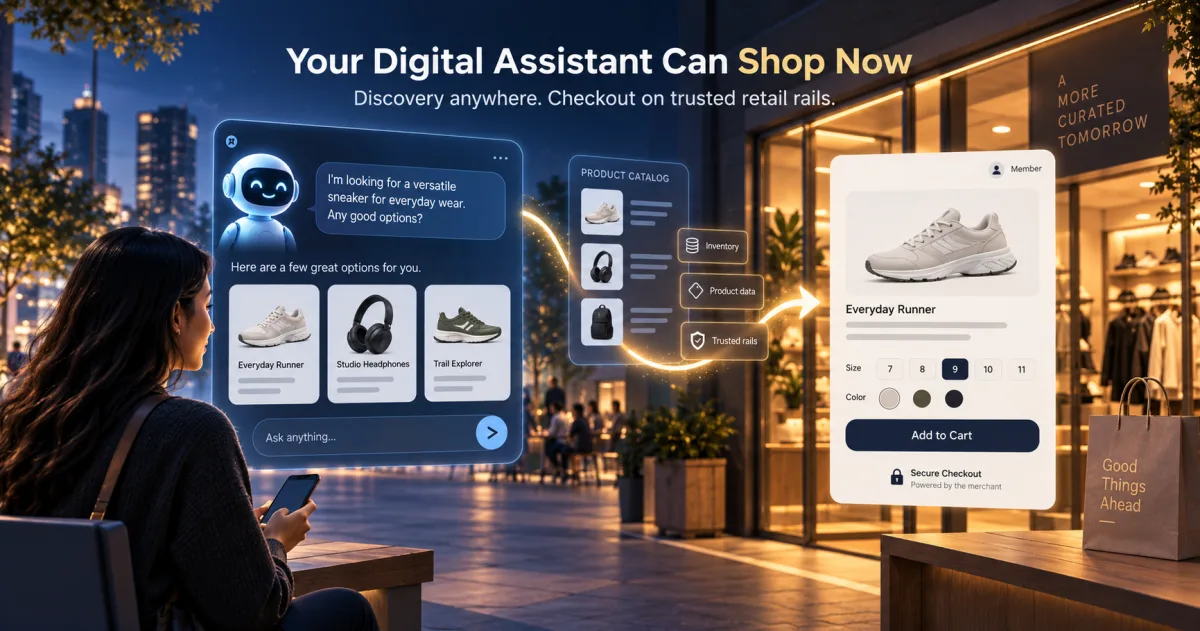
Meta’s Muse can now buy across Shopify stores with Shop Pay. The front door moves into the assistant; the catalog, the checkout and the product facts stay with the merchant.
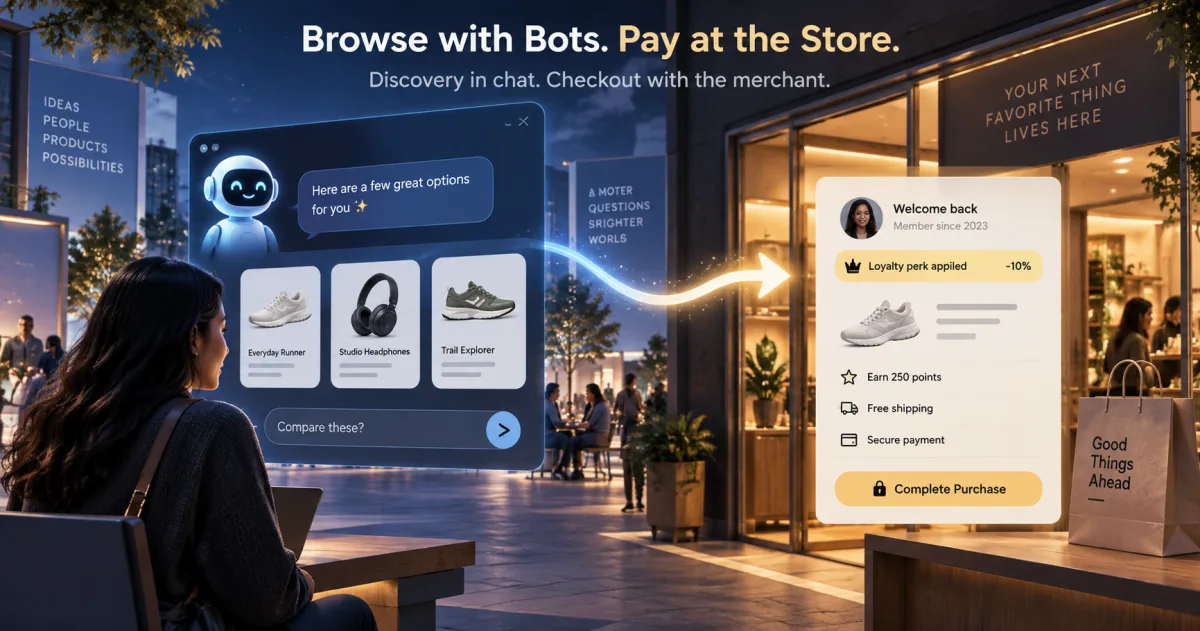
In-chat checkout gave way to discovery in chat and payment at the merchant. The split is honest — and it asks your product facts, inventory, price and customer recognition to line up at every entrance.
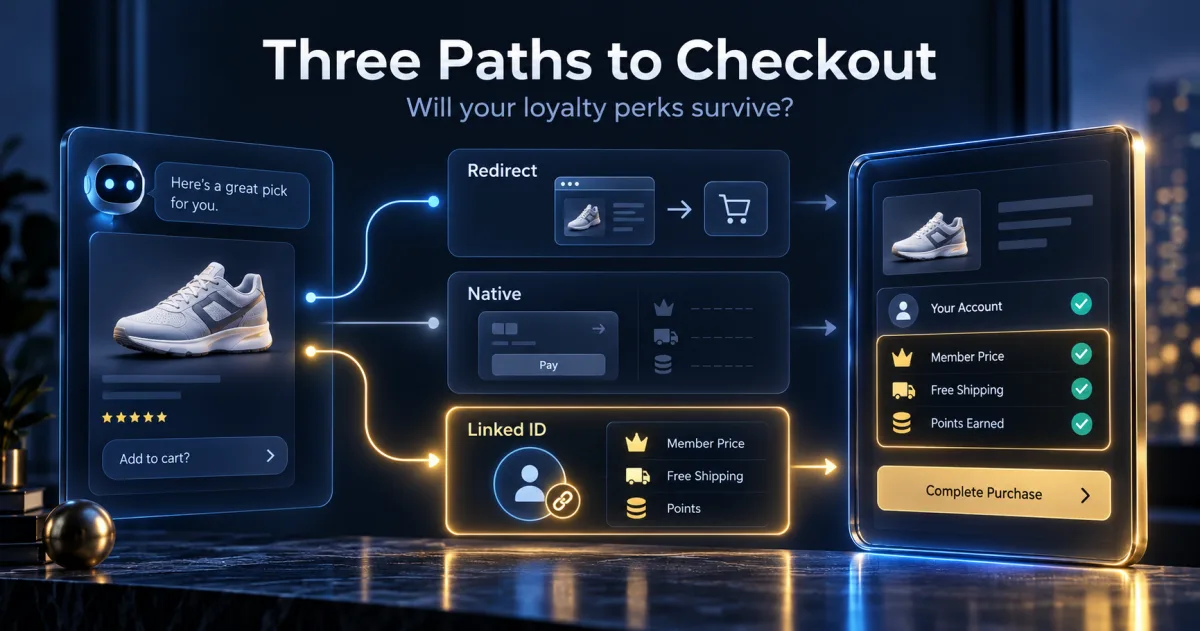
Merchant Center’s open commerce integration now offers three checkout routes. Only one of them carries the buyer’s identity — and with it the member price, the free shipping and the points.

Google’s conversational performance insights are live in Merchant Center — share of voice against rivals, the stage a query belongs to, and the attributes you never filled in. A mirror reflects what is there; it does not fix it.
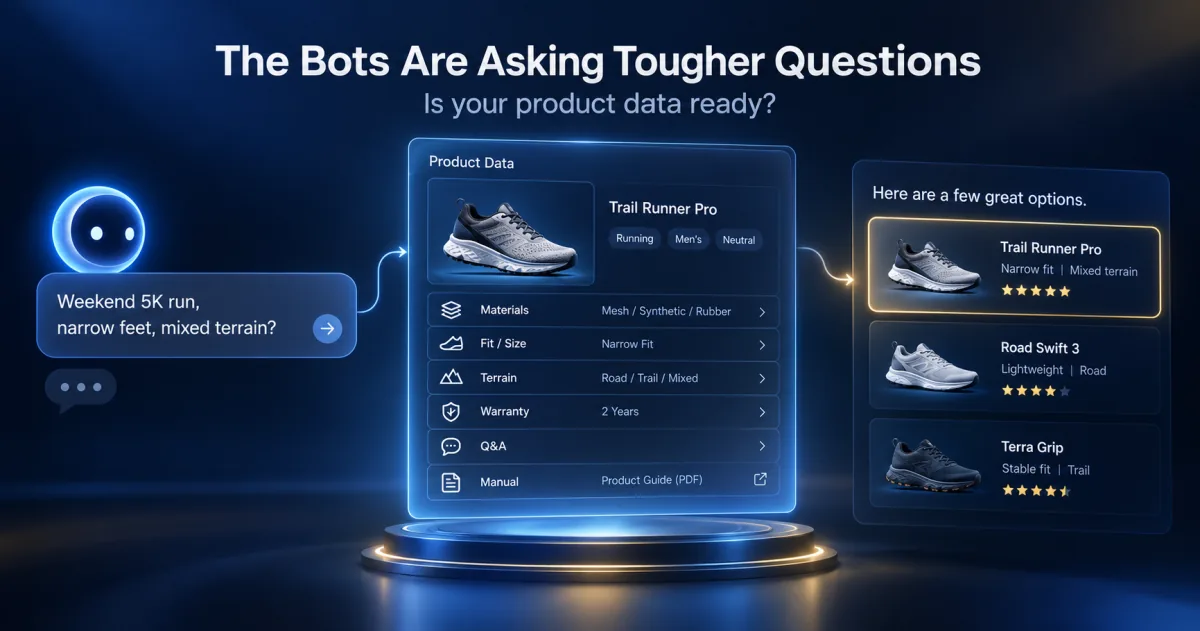
Google added conversational attributes to Merchant Center — highlights, details, variants, Q&A, document links. They are containers for verifiable facts, not keywords, and an empty one answers nothing.

Bot shopping is grabbing headlines again — but a fresh report puts assistant-driven shopping under 1% of e-commerce. The real fight isn’t which giant wins; it’s whether your product data is trusted enough to make the machine’s shortlist.

The agent race moved from “how do I get recommended?” to “who is allowed to spend the money?” Discovery finds the product; identity decides if the sale is even allowed.
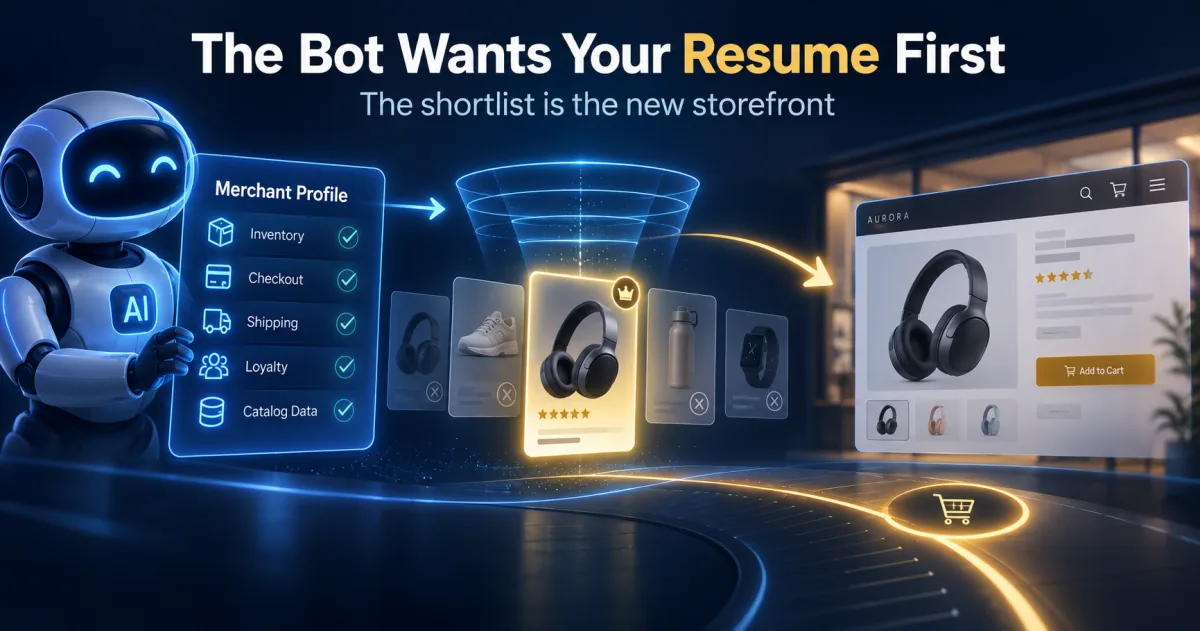
Comparison shopping moved into the chat window. The shortlist is the new shelf — you make it with capabilities you can back up and data the machine can trust.
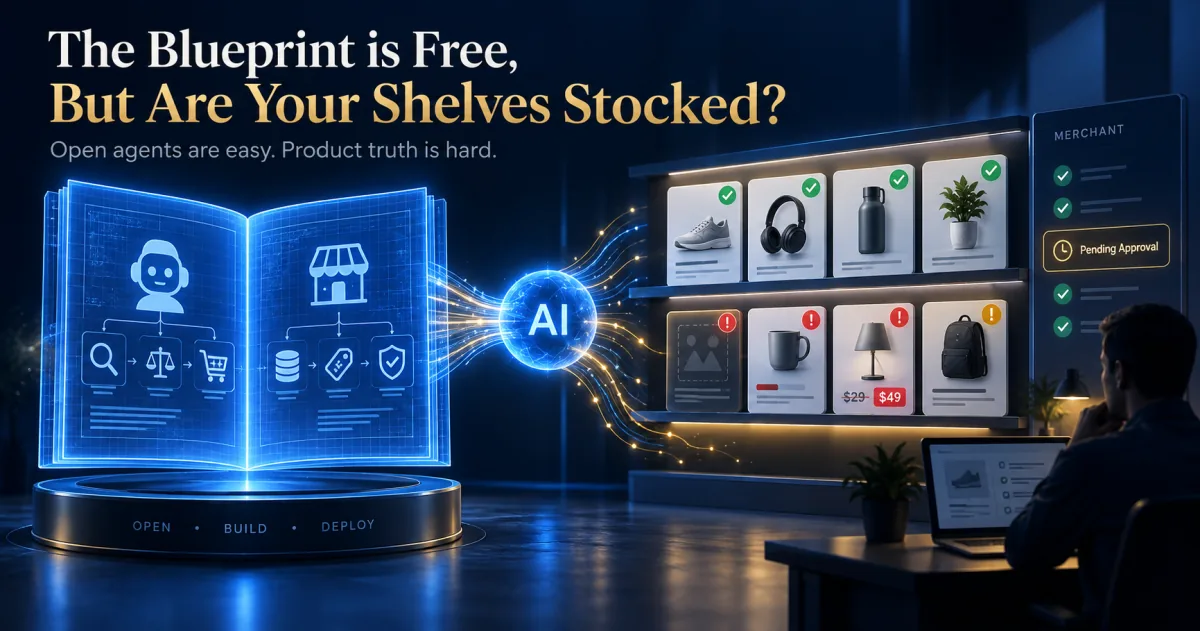
Anthropic open-sourced the commerce-agent playbook. Building the bot is no longer the moat — being data the machine can trust is.
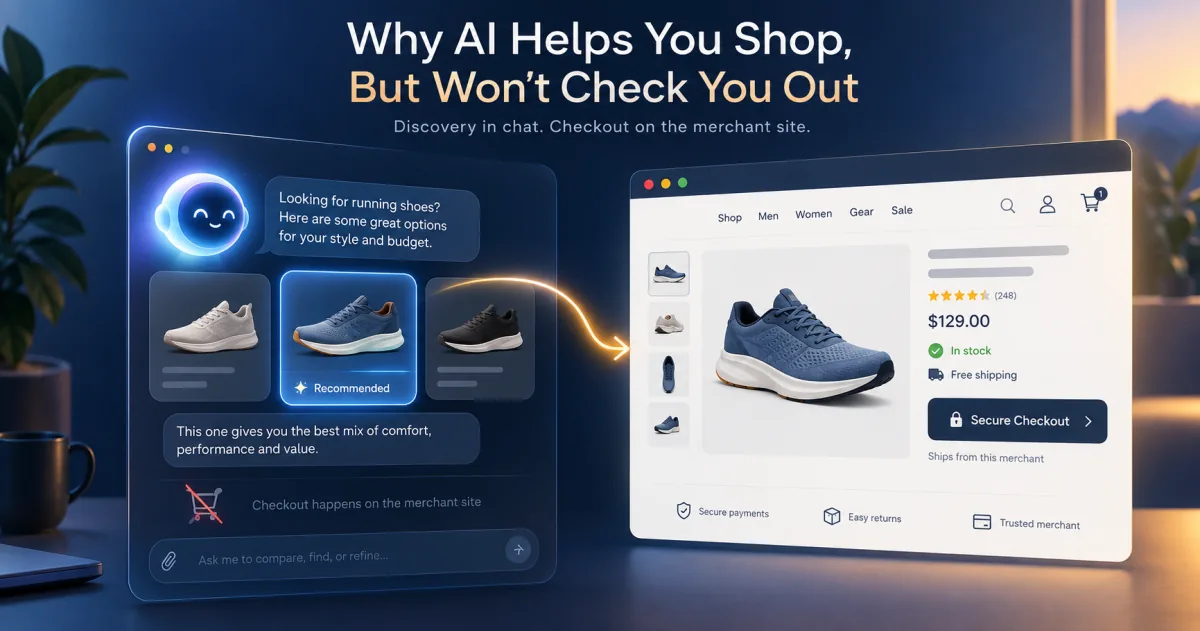
OpenAI pulled in-chat checkout: discovery stays in the conversation, the transaction returns to the merchant. What lands you on the AI’s shortlist matters more than any checkout button.
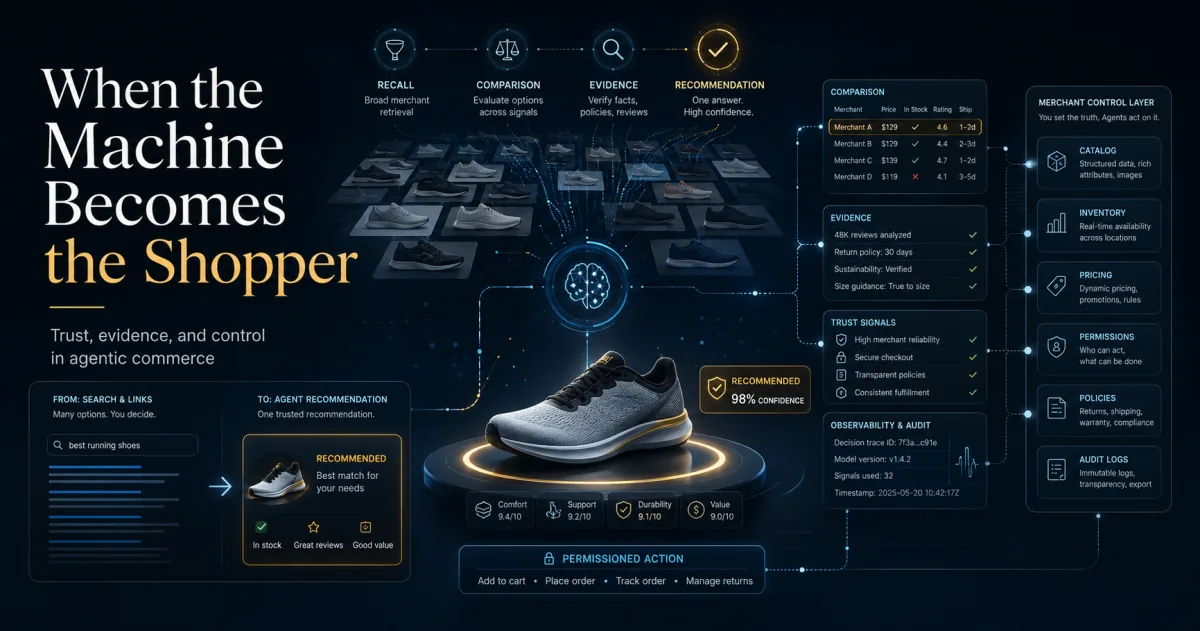
AI agents now name one product and quietly omit the other ninety-nine. The scarce thing is no longer visibility — it's trust, evidence, and control.